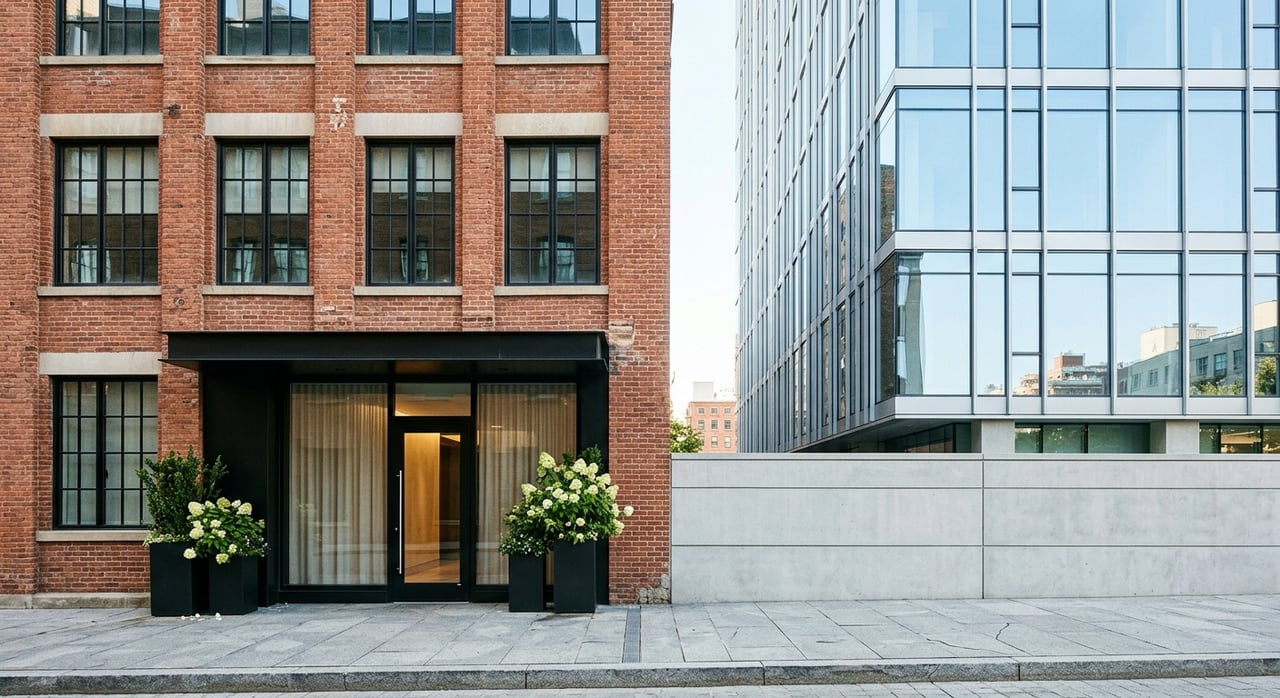
Seaport District New vs Resale Condos: What to Know
July 16, 2026
July 16, 2026
If you are deciding between a brand-new condo and a resale unit in Seaport, you are not just comparing finishes. You are weighing lifestyle, monthly carrying costs, building history, and how each option may perform over time in one of Boston’s most expensive condo markets. The good news is that both paths can make sense, and the right choice usually comes down to how you want to live and what tradeoffs you are comfortable making. Let’s dive in.
Seaport remains a premium condo market with limited inventory and high prices. In June 2026, Redfin showed 67 condos for sale with a median listing price of $2.06 million and a median market time of 83 days. An MLS PIN-based Seaport District report dated April 16, 2026 showed 51 active listings, an average list price of $3.95 million, 10.20 months of supply, and an average sale price of $3.05 million at $1,876.52 per square foot.
Those figures do not match exactly because they come from different sources and dates, but they point in the same direction. Seaport is still a high-price market, yet it is not moving without friction. MLS PIN-based data showed 110 average days on market for 2026 year-to-date sales and a 95.23% sale-to-original-list ratio, while Redfin showed a 94.1% sale-to-list ratio and a 93-day median on market.
New construction and recent-delivery condos in Seaport often appeal to buyers who want a polished, move-in-ready experience. These buildings tend to offer newer systems, current design finishes, and a long list of on-site amenities. If convenience and service matter most to you, newer product can be very compelling.
In Seaport, that lifestyle often comes with a resort-style feel. Echelon Seaport describes a three-tower, 717-residence development with 60,000 square feet of amenities, including indoor and outdoor pools, a wellness center and spa, multiple lounges, a golf simulator, yoga and stretching rooms, and an innovation center. Its current project materials identify 133 and 135 Seaport Boulevard as the condominium addresses, with 255 condominium residences in the flagship tower.
Many buyers are drawn to recent-delivery towers because the day-to-day experience can feel seamless. Concierge service, valet parking, fitness centers, pools, lounges, and garage parking can simplify city living and support a lock-and-leave lifestyle. You may also find modern floor plans and finishes that need little or no immediate updating.
Recent listings at 150 Seaport Boulevard, a 2021-delivered building, help illustrate the point. Sample listings ranged from about $1.75 million to nearly $4.0 million, with monthly HOA dues from $2,128 to $3,528. Those listings also highlighted features often associated with newer Seaport buildings, including an indoor pool, spa, fitness center, clubroom, concierge, valet parking, and garage parking.
The biggest tradeoff is usually cost beyond the purchase price. Amenity-rich buildings often carry significantly higher monthly HOA dues, and those costs can materially affect your total monthly budget. In Seaport, this is not a minor line item.
300 Pier 4 is a useful example because it is still modern but has already developed some operating history. Public records identify the building as 2017 vintage, and current listings showed HOA dues from about $2,980 to $5,001 per month. A recent sold penthouse carried a $4,181 monthly fee, which is a good reminder that newer or nearly new towers can feel turnkey while still carrying substantial ongoing costs.
Resale condos in Seaport are not necessarily older in the traditional Boston sense. Many are still luxury properties with contemporary finishes and strong amenity offerings. The difference is that the building has had more time to establish how it operates after initial developer delivery.
That operating history can be valuable. Instead of buying into a building with a shorter financial and maintenance track record, you may be able to review years of budgets, reserve decisions, maintenance patterns, and meeting minutes. For many buyers, that added predictability is just as important as having the newest lobby or amenity floor.
Twenty Two Liberty is a strong example of established luxury ownership in Seaport. Built in 2015, a currently listed one-bedroom unit showed a price of $1.55 million, $1,498 per square foot, and monthly HOA dues of $966. The listed association fee included heat, gas, water, sewer, insurance, security, building and grounds maintenance, snow removal, trash, air conditioning, and reserve funds.
The building amenities there still support a high-end lifestyle, including 24-hour concierge service, Stretch 22, and the Harbor Club terrace. In other words, choosing resale does not mean giving up quality. It may simply mean shifting your focus from the newest amenity stack to a building with a longer record of real-world performance.
A mature association can give you more clarity about what ownership may actually look like over time. You can often see whether fees have stayed relatively stable, how reserves are handled, and whether the building has faced notable maintenance issues or assessments. That history does not remove risk, but it gives you more evidence to work with.
In a high-cost market like Seaport, that evidence matters. The difference between roughly $966 per month in dues at one building and $2,000 to $5,000 per month at another can meaningfully change affordability and long-term carrying costs. That spread alone is a strong reason to compare buildings carefully rather than assume newer is always better.
The real question is not which category is better in the abstract. It is which option fits your priorities, budget structure, and ownership horizon.
| Factor | New Construction or Recent Delivery | Resale or Established Condo |
|---|---|---|
| Finishes | Typically the newest | May be newer or lightly lived-in, depending on building |
| Amenities | Often the most extensive | Can still be strong, but may be less expansive |
| HOA dues | Often higher | Sometimes lower or more predictable |
| Operating history | Shorter track record | Longer budget and maintenance history |
| Lifestyle appeal | Turnkey, service-heavy living | More emphasis on known building performance |
| Due diligence focus | Building startup and fee structure | Budget trends, reserves, and maintenance patterns |
In Seaport, monthly HOA dues are one of the clearest dividing lines between new construction and resale. Fees may reflect staffing, amenity intensity, insurance, reserve funding, maintenance obligations, and the overall operating model of the building. Two condos at similar purchase prices can feel very different once you factor in dues.
Massachusetts condominium guidance notes that condo documents address trustees, maintenance and repair, insurance, meetings, voting rights, common-area expenses, reserve funds, and special assessments. For you as a buyer, that means the monthly fee is only the starting point. You also want to understand what the fee covers and how well the association plans for future costs.
Before you commit, review the association with the same care you would give the unit itself. A beautiful home in a poorly run building can become an expensive lesson.
Focus on documents and details such as:
Fannie Mae also distinguishes between new and established condo projects and notes that project review can involve budgets, financial statements, reserve studies, and other project-level documents. In practice, that means the building matters almost as much as the residence itself.
If you are buying with long-term value in mind, it helps to look beyond today’s inventory. Seaport and nearby downtown areas still have development activity in the pipeline, which can influence buyer choice and future competition. More supply does not automatically weaken values, but it can affect how unique your unit feels when it is time to sell.
Boston Planning documents show a 776 Summer Street Phase 2 proposal with up to 636 residential units nearby. The City also said in March 2026 that the downtown office-to-residential pipeline was on track to produce more than 1,700 new homes. That does not prove resale values will soften, but it is a smart reminder to think about future supply when projecting appreciation.
In Seaport, long-term value is often driven by factors more specific than simple building age. A newer condo is not automatically the stronger buy, and an established condo is not automatically the better value. The details of the unit and building usually carry more weight.
Pay close attention to:
These factors often shape both your ownership experience and eventual resale appeal. In a neighborhood where prices are already elevated, small differences in layout, exposure, amenities, and fee structure can have an outsized impact.
If you love full-service living, want the newest finish package, and are comfortable with higher monthly dues, new construction or recent-delivery product may be the right fit. You may place the highest value on convenience, amenities, and a turnkey feel. In that case, the premium can make sense.
If you prefer more operating history, want better visibility into the association’s financial patterns, or hope to keep monthly costs more controlled, a resale condo may be the stronger choice. You are not necessarily sacrificing quality. You are often gaining more data and, in some cases, a more predictable ownership picture.
In either case, Seaport is a market where careful building-level analysis matters. The right purchase is usually the one that aligns your lifestyle goals with the numbers, not the one with the flashiest marketing. That is where local, detail-driven guidance can make a real difference.
If you are weighing new construction versus resale in Seaport, the team at Steve Losordo & Jillian Reig can help you compare buildings, carrying costs, and market position with the kind of neighborhood-specific guidance that makes complex decisions feel clear.
Stay up to date on the latest real estate trends.


Buying, selling, or investing in Boston real estate? Reig + Losordo provides personalized strategies, market expertise, and a seamless experience from start to finish. With deep local knowledge and a proven track record, we’re here to help you navigate every step with confidence. Let’s make your next move a success.
Get In Touch With Our Team

ADDRESS 399 Boylston St Boston, MA 02116