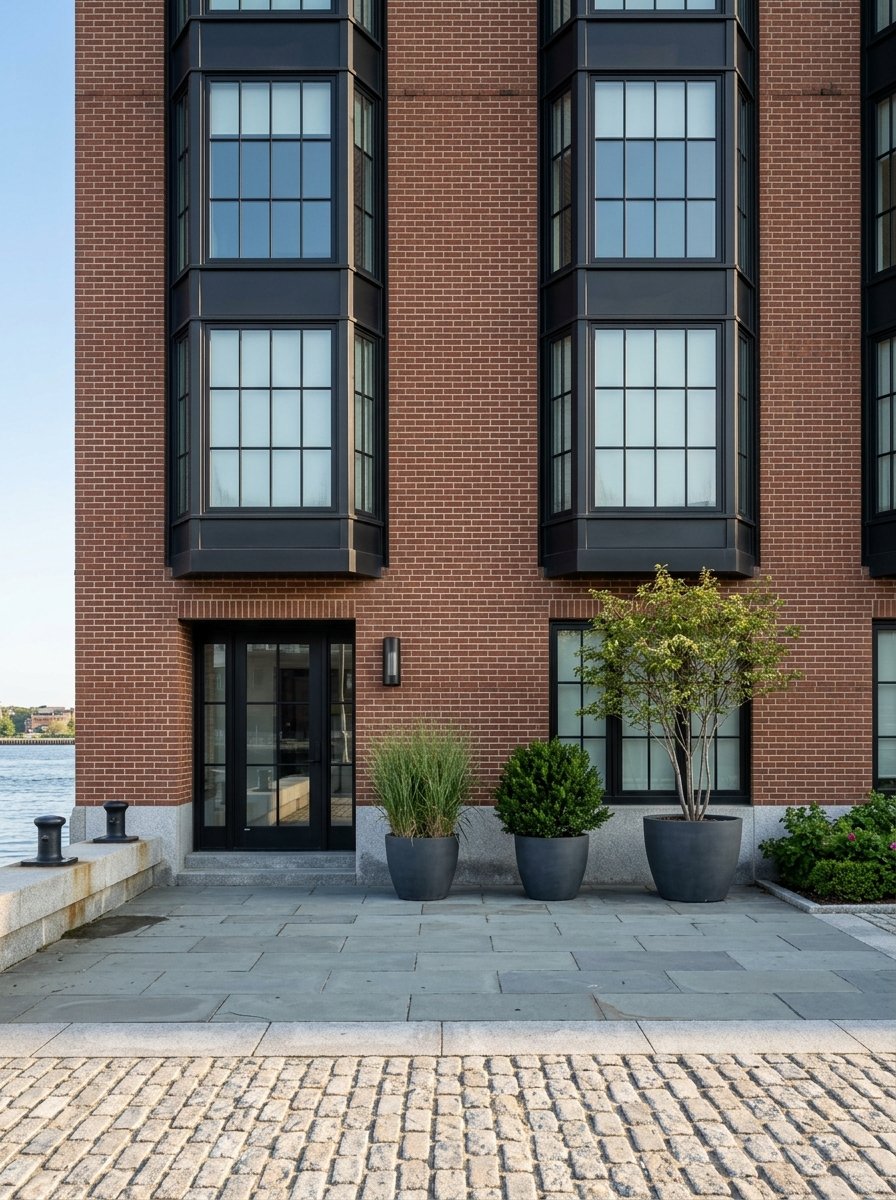
Boston Waterfront Condo Living and Daily Life
June 18, 2026
June 18, 2026
If you love the idea of city living with water outside your window, Boston’s Waterfront is one of the few places where that vision can actually shape your daily routine. This neighborhood blends downtown convenience, harbor access, and condo living in a way that feels distinctly Boston. If you are weighing a move here, it helps to understand not just what the area looks like, but how it functions day to day. Let’s dive in.
Boston’s Waterfront sits between Downtown, the Wharf District, and the North End. According to the City of Boston, the Wharf District includes Long Wharf, Central Wharf, India Wharf, Rowes Wharf, Griffin Wharf, Independence Wharf, Russia Wharf, Town Cove, and nearby Greenway parcels. That location puts you at the center of a long-established civic and commercial part of the city.
In practical terms, you are close to restaurants, cafes, theaters, the Freedom Trail, and Faneuil Hall. The area is not tucked away from urban activity. Instead, it gives you a front-row seat to one of Boston’s most connected and visible waterfront districts.
One of the biggest lifestyle advantages here is how easy it is to move through the neighborhood on foot. The Harborwalk is a major part of that experience. Boston Harbor Now describes it as a near-continuous 43-mile waterfront linear park that links shoreline neighborhoods and includes seating areas, parks, art, cafes, exhibit spaces, and water transportation access.
That means the water’s edge is more than a backdrop. It becomes part of your routine, whether you are heading out for a morning walk, meeting friends nearby, or simply taking the long way home to spend a few extra minutes by the harbor. For many buyers, that everyday access is what separates the Waterfront from other downtown condo locations.
Waterfront living often sounds car-dependent in other cities, but Boston’s Waterfront works differently. The area is unusually well connected by subway, ferry, and foot. The main ferry docks are accessible from Atlantic Avenue and the Harborwalk, and they are within walking distance of Aquarium Station.
Long Wharf South serves Charlestown Navy Yard. Long Wharf North serves Logan Airport, Hingham, and Hull, while Rowes Wharf serves direct Hingham service. Boston Harbor Now also notes year-round ferry service to Charlestown Navy Yard, Hingham, Hull, and Logan Airport, along with seasonal service to East Boston, Lynn, Quincy, and Winthrop.
The subway access matters just as much. Aquarium Station is only a short walk from the central waterfront, and the Orange, Green, and Red Lines are also nearby. If you want a downtown address without depending fully on a car, this is one of the neighborhood’s clearest advantages.
The Waterfront includes places many people think of as visitor destinations, but for residents they also become part of the rhythm of the week. The New England Aquarium sits on Central Wharf, with easy access to the Financial District, Government Center, Faneuil Hall, Quincy Market, and the North End. That creates a neighborhood feel that is active and outward-facing.
You are also close to a wide mix of dining and public spaces. The City of Boston highlights nearby theaters, restaurants, cafes, and miles of waterfront. The North End adds another layer, with old-world cafes and a strong restaurant presence just a short walk away.
For outdoor recreation, the nearby North End waterfront includes a skating rink, baseball fields, and the Mirabella Pool in summer. Boston Harbor Now says the Harborwalk connects people to more than 40 parks, a dozen museums, seven beaches, and hundreds of restaurants and stores. That kind of access helps explain why the neighborhood can feel both urban and maritime at the same time.
The Waterfront changes with the weather more than some Boston neighborhoods do. In summer, public life expands. Harbor programming includes festivals, island trips, cruises, and seasonal events that make the area feel especially social and active.
Harborfest adds another layer with historical programming, live music, family activities, and fireworks. During the warmer months, the neighborhood often feels like an open-air extension of the city. Even if you stay close to home, there is more motion, more foot traffic, and more ways to use the harbor.
Winter brings a different pace. The City of Boston emphasizes snow alerts, sidewalk clearing, and storm preparation, and Boston’s shoreline is also exposed to winter storms, nor’easters, king tides, and sea-level rise. Even so, the area remains active, with winter waterfront programming centered on dining, art, light installations, and ways to enjoy the harbor in colder weather.
Long-term livability matters when you buy near the water. Boston is actively planning for resilience along this part of the harbor, including flood-protection and public-space strategies for Christopher Columbus Park, Langone/Puopolo Park, Sargent’s Wharf, and Long Wharf. Those efforts matter because they connect waterfront access, infrastructure, and public use.
For buyers, that planning helps frame the neighborhood as a place where the city is thinking ahead. It does not remove the realities of living along the shoreline, but it does show that waterfront resilience is being addressed as part of the area’s future.
The Waterfront is primarily a condo-driven lifestyle. If you are comparing it to brownstone neighborhoods in Boston, the trade-off is fairly clear. Here, many buyers are choosing low-maintenance living, harbor views, and transit access over the yard-and-stoop feel that comes with more traditional rowhouse blocks.
That difference is not just aesthetic. It shapes how you use your space, how much time you spend maintaining a home, and what kind of city experience you want. The Waterfront tends to appeal to buyers who want an amenity-rich, lock-and-leave urban lifestyle with direct access to the harbor and downtown.
The Waterfront sits at the higher end of Boston’s condo market. Realtor.com’s April 2026 snapshot for the Waterfront showed 17 homes for sale, a median listing price of $1,625,000, a median sold price of $1,475,000, and a median 35 days on market. Redfin’s broader North End/Waterfront snapshot for May 2026 showed a median sale price of $1,108,127 over the prior three months, 67 median days on market, and 33 homes sold.
Those figures are based on different neighborhood boundaries, so they should not be read as a direct comparison. Still, both point to a premium market with relatively limited turnover. For broader context, Boston’s FY27 budget document lists the citywide median condo sale price in 2025 at $721,750, which places the Waterfront well above the citywide median.
That premium aligns with what buyers are paying for here: water orientation, transit convenience, walkability, and a distinctive downtown-harbor setting. In other words, the pricing reflects not just the homes themselves, but the lifestyle that comes with the address.
The Waterfront tends to work well for buyers who want a polished urban lifestyle and value convenience. If you picture yourself walking to dinner, stepping onto the Harborwalk, catching a ferry, or getting to the airport without a long commute, the neighborhood checks a lot of boxes. It can also be appealing if you want a Boston home that feels active, central, and easy to lock up when you travel.
At the same time, it helps to be honest about what you want. If your ideal Boston home is a classic brownstone block with a more tucked-away residential feel, another neighborhood may be a better fit. The Waterfront is best understood as a dynamic condo market with a distinctly public, connected, and water-facing personality.
If you are thinking about buying or selling on Boston’s Waterfront, working with advisors who understand the nuances of Boston condo living can make the process much clearer. Steve Losordo & Jillian Reig bring neighborhood-focused guidance, senior-level attention, and a high-touch approach to helping clients navigate Boston’s luxury market.
Stay up to date on the latest real estate trends.

Buying, selling, or investing in Boston real estate? Reig + Losordo provides personalized strategies, market expertise, and a seamless experience from start to finish. With deep local knowledge and a proven track record, we’re here to help you navigate every step with confidence. Let’s make your next move a success.
Get In Touch With Our Team

ADDRESS 399 Boylston St Boston, MA 02116