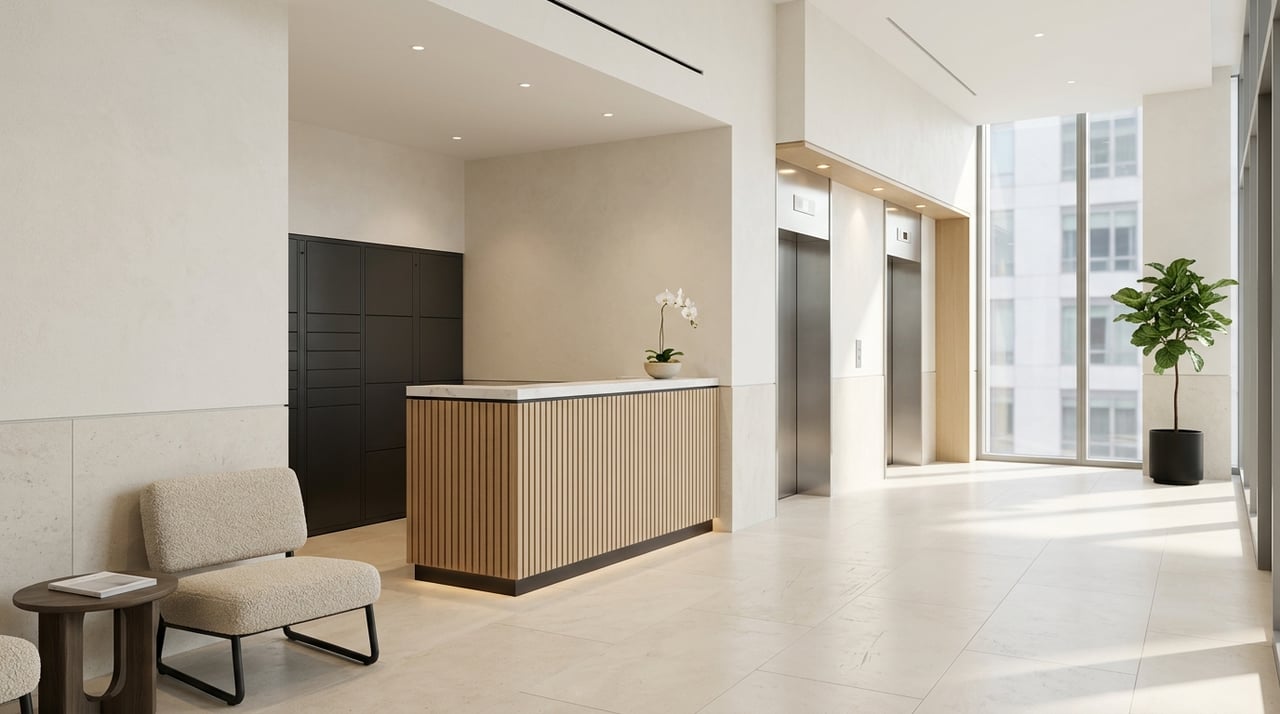
How to Evaluate Midtown Boston Luxury Condos
July 2, 2026
July 2, 2026
If you are shopping Midtown Boston luxury high-rises, it is easy to get distracted by glossy lobbies, dramatic views, and a long amenity list. But the right condo is usually about more than what looks impressive on a tour. When you know how to compare service, views, parking, unit mix, and HOA strength, you can make a much smarter decision. Let’s dive in.
Midtown Boston overlaps much of Downtown, including Downtown Crossing and the Theater District, which gives you access to some of the city’s most connected urban living. The area puts theaters, restaurants, cafes, Boston Common, the Rose Kennedy Greenway, Dewey Square, and the waterfront within easy walking distance.
It is also a true center of activity. According to the City of Boston, about 200,000 people work downtown every day, and roughly 250,000 pedestrians pass through Downtown Crossing. That energy is part of the appeal, especially if you want convenience and a strong city feel right outside your door.
At the same time, Midtown is not a static market. Boston is updating Downtown zoning to support more housing density and adaptive reuse, which means future supply and view corridors can change over time. That makes careful building-by-building evaluation especially important.
In Midtown, a luxury high-rise often functions like an operating system for your daily life. The real value is not just square footage. It is how smoothly the building handles arrival, service, privacy, amenities, and long-term ownership costs.
That is why many buyers find that small differences in layout matter less than the bigger experience of living in the tower. A strong concierge team, reliable valet setup, durable view, and healthy HOA can influence your lifestyle and resale value more than a few extra feet in a living room.
Luxury buildings in Midtown Boston offer very different amenity packages. Some focus on deep service and club-style living, while others offer a more streamlined set of conveniences.
Millennium Tower Boston is known for an extensive amenity package, including a two-level 23,000-square-foot Club, a 75-foot indoor lap pool, private dining, owner’s lounge, library, screening room, spa, children’s playroom, and fitness and spa services. Millennium Place includes a 24-hour private concierge, valet parking, owners lounge, wine and dining room, garden, fitness center, screening room, and children’s room.
The Parker offers a roofdeck, lounge, theater, billiards room, fitness center, and white-glove valet service. W Boston Residences adds a hotel-style angle with valet service, garage access, and shared access to hospitality-style spaces such as a restaurant, spa, lounge, gym, and business areas.
The key is to ask yourself what you will actually use. A pool, screening room, or club lounge sounds appealing, but your monthly ownership costs should feel justified by your real lifestyle, not just by a tour-day impression.
In Midtown, service is one of the biggest differentiators between luxury towers. Buildings may all describe themselves as full-service, but the daily experience can vary.
Millennium Tower emphasizes valet, doorman, and concierge service. Millennium Place also highlights white-glove concierge and valet parking, while The Parker includes door-to-door valet through Acorn Club and 24/7 vehicle access.
When you tour, pay attention to how the building feels in motion. Think about package handling, guest arrival, car retrieval, lobby staffing, and the overall sense of responsiveness. In a luxury condo, service quality is not a side detail. It is a major part of what you are buying.
Views can create large value differences within the same building. One of the biggest mistakes buyers make is assuming that a higher floor automatically means a better residence.
Millennium Tower notes that Boston Common and city views are available only in some residences, so exposure should be verified stack by stack. The Parker highlights floor-to-ceiling windows and Boston Common or skyline views, which makes upper-floor and corner-unit comparisons especially important.
Millennium Place says its glass facade was designed so all residences receive sunlight and city views, while W Boston shows how one tower can produce very different value tiers depending on orientation, including skyline, harbor, park, river, and distant views. That means you should compare not only floor level, but also direction, window placement, and whether the best sightlines come from living areas, bedrooms, or both.
A great view today is not always a guaranteed view tomorrow. Because Downtown zoning continues to evolve, future housing and adaptive reuse projects may change the outlook from some residences.
This does not mean you should avoid Midtown. It means you should ask better questions. If a view is a major part of the value, make sure you understand what surrounding sites could change and which sightlines are more likely to remain open over time.
Parking is a meaningful value driver in Midtown Boston luxury condos. In a dense, high-activity downtown setting, arrival and vehicle access can have a real effect on daily convenience.
Massachusetts condo law treats parking areas and storage spaces as common areas and facilities, which means they can affect association obligations and monthly costs. That is one reason parking should never be treated as a simple checkbox.
Instead, ask exactly how parking works. Is the space deeded, assigned, or valet-based? Is there a dedicated space, or does the building rely on a service model? How fast and reliable is retrieval during busy hours or weekends?
For some buyers, valet service feels seamless and worth the tradeoff. For others, direct control over a dedicated space is more appealing. The right answer depends on your routine, but the details matter either way.
Not all Midtown towers have the same supply profile. That affects both the ownership experience and future resale dynamics.
Millennium Tower is sold out, so it now serves mainly as a resale benchmark rather than a source of active new inventory. Millennium Place has 256 homes plus 14 penthouses, The Parker has 168 units, and W Boston offers 123 private condos.
That difference matters. In practice, smaller buildings and penthouse tiers can feel more scarce, which may influence demand and negotiation when a desirable residence comes to market. If you are deciding between towers, scarcity can be just as important as amenities.
A luxury condo purchase should include serious HOA due diligence. Condo fees are typically paid directly to the association and are not part of your mortgage payment, so they should be treated as part of your true monthly cost from the start.
Under Massachusetts condo law, common expenses include administration, maintenance, repair, and replacement. The law also requires a separate replacement reserve fund, financial records and reserve-fund records, and financial reports prepared within 120 days of the fiscal year-end, with copies made available to unit owners within 30 days of completion.
For larger condominiums, there are also review and insurance requirements. Buildings with 50 or more units must have an independent CPA review annually, or at least every two years if the statute allows, and condominiums with more than 10 units must carry blanket fidelity insurance equal to at least one-fourth of annual assessments, excluding special assessments.
For you as a buyer, the practical questions are simple. Do the monthly fees reflect real service and maintenance? Are reserves adequately funded? Have there been recent special assessments, or signs that future ones may be likely? If the building offers parking or EV charging in common areas, how are those costs and policies handled?
It helps to understand what Midtown offers compared with other Boston Proper neighborhoods. Back Bay, Beacon Hill, and the South End each bring a different ownership experience.
Back Bay is known for historic architecture and regulated streetscapes. Beacon Hill is one of Boston’s oldest protected historic districts, and the South End is recognized for its Victorian brownstones, parks, arts activity, and restaurant scene.
Midtown towers often stand out on elevator convenience, service, parking logistics, and open-sky or skyline views. The tradeoff is that you may face higher association costs and a downtown supply pipeline that continues to evolve.
If you are choosing Midtown, you are often choosing a high-service vertical lifestyle over a historic low-rise one. That is not better or worse. It is simply a different set of priorities.
When you compare Midtown Boston luxury high-rises, focus on the points that have the biggest long-term impact:
The more clearly you answer those questions, the easier it becomes to separate true value from surface-level polish.
In Midtown Boston, luxury buying is rarely just about finding the nicest finishes. It is about choosing the building that best supports your lifestyle, protects your investment, and feels right every day you come home. If you want a clear, building-by-building perspective on Midtown condos, Steve Losordo & Jillian Reig can help you compare options with the local insight and high-touch guidance this market deserves.
Stay up to date on the latest real estate trends.
Buying, selling, or investing in Boston real estate? Reig + Losordo provides personalized strategies, market expertise, and a seamless experience from start to finish. With deep local knowledge and a proven track record, we’re here to help you navigate every step with confidence. Let’s make your next move a success.
Get In Touch With Our Team
ADDRESS 399 Boylston St Boston, MA 02116